Governance Without Groundwork: How Premature Data Decisions Are Quietly Sabotaging Enterprise Transformation
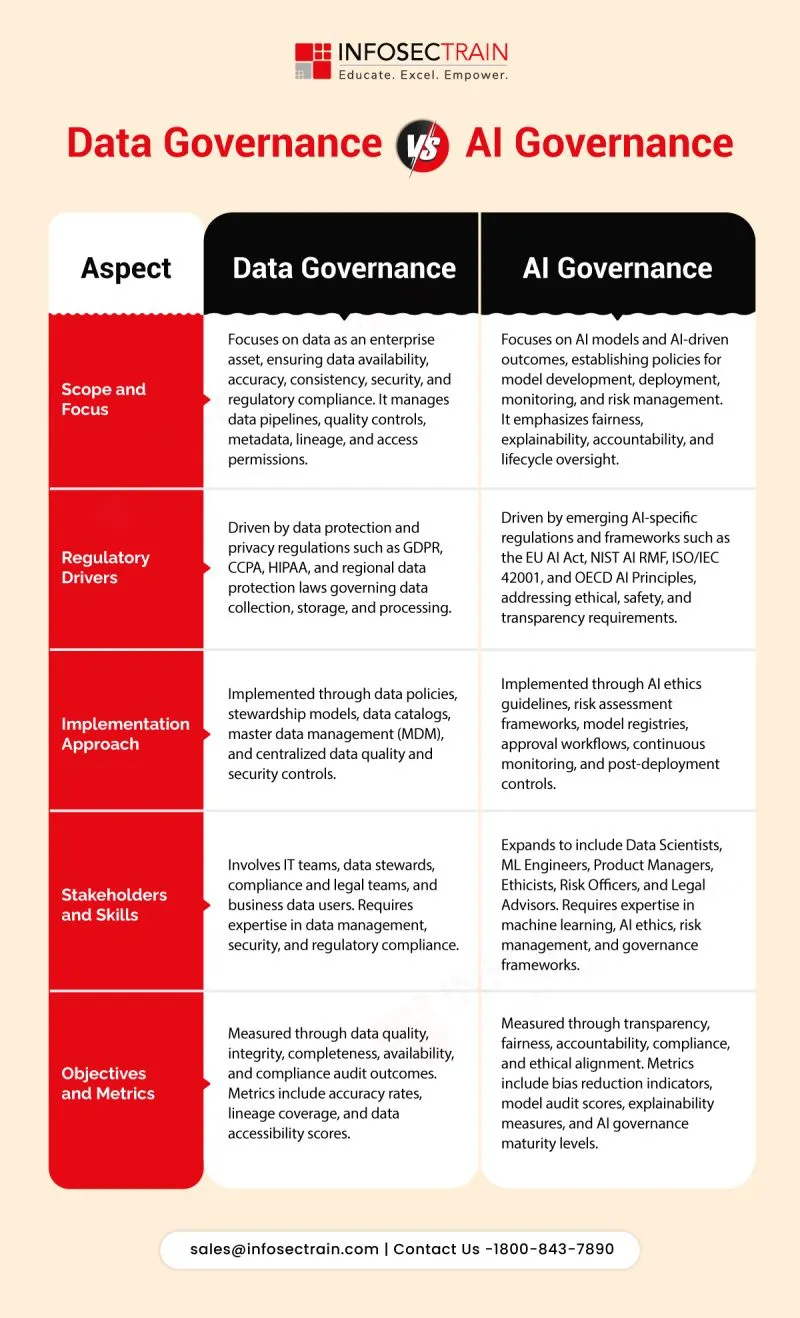
Photo: Ishdeepinfosectrain, CC BY 4.0, via Wikimedia Commons
There is a particular kind of organizational confidence that precedes a governance collapse. Leadership has approved the roadmap. The data catalog vendor has been selected. The steering committee has held its kickoff meeting. On paper, everything looks like progress.
Then, six to eighteen months later, the catalog sits largely unpopulated. Business units are still emailing spreadsheets. The chief data officer — if one was appointed at all — is fielding complaints from both the IT department and the lines of business. The governance initiative, which was supposed to unlock data democratization, has instead produced a new layer of friction that nobody asked for.
This is not an unusual story. It is, in fact, the dominant story of enterprise data governance in the United States today. And the reason it keeps repeating has very little to do with technology.
The Sequence Problem Nobody Talks About
Most organizations approach data governance as a post-migration concern. The logic is understandable: first move the data to the cloud or the modern data platform, then govern it. But this sequencing embeds a fundamental error into the initiative from the outset.
Governance decisions made in the planning phase — about ownership, classification, access control, and stewardship accountability — carry assumptions about organizational structure and culture that may not reflect reality. When those assumptions prove incorrect, the governance model does not simply underperform. It actively obstructs the workflows it was designed to support.
Consider a regional financial services firm in the Midwest that spent fourteen months implementing a data governance framework ahead of a core platform migration. The framework assigned data ownership to department heads based on an org chart that had been restructured twice during the implementation period. By the time the platform went live, roughly forty percent of the designated data owners had either changed roles or left the organization. The governance model had no mechanism for reassigning stewardship dynamically. The result was a system where access requests sat in queues for weeks, and frontline analysts quietly reverted to pulling data directly from source systems — the exact behavior the governance initiative was designed to eliminate.
When Structure Precedes Culture, Both Fail
The deeper problem is that governance frameworks are structural instruments being deployed into cultural environments that have not been prepared to receive them. Data ownership, in particular, is not a technical designation. It is a political and behavioral commitment. Telling a department head that they are now responsible for certifying the quality and appropriate use of a dataset means very little if that individual has no incentive, no capacity, and no clear understanding of what certification actually requires.
A mid-market healthcare technology company on the East Coast learned this distinction expensively. Their governance initiative included a well-designed data stewardship model with clearly documented roles and responsibilities. What it lacked was any investment in change management. Stewards were assigned without consultation. Training was a forty-five-minute recorded webinar. Within three months, stewardship tasks were being ignored at a rate that rendered the entire quality assurance layer of the framework non-functional.
The CTO later described the experience as "building a compliance structure inside a company that hadn't decided to be compliant yet." That framing captures something important: governance is not a structure you impose on an organization. It is a set of behaviors an organization must choose to sustain.
The Democratization Paradox
One of the most counterintuitive outcomes of poorly sequenced governance is that it consistently produces the opposite of data democratization. Organizations that implement access controls and classification schemes before establishing clear business use cases tend to default toward restriction rather than enablement. When in doubt, lock it down. When uncertain about sensitivity, treat it as sensitive.
This instinct is understandable from a risk management perspective. But in practice, it means that the analysts and product managers and operations teams who were supposed to benefit from the modern data platform find themselves navigating approval workflows that are more cumbersome than what existed before the transformation.
A manufacturing company in the Southeast described their post-implementation environment as "governed into paralysis." Their data governance platform was technically sound. Their policy documentation was thorough. But because the framework had been designed without meaningful input from the business users it was meant to serve, the access tiers bore no relationship to how those users actually worked. Analysts with legitimate, time-sensitive needs were being routed through approval chains designed for edge cases.
What Structural Readiness Actually Requires
The organizations that avoid these failure patterns share a set of prerequisites that are rarely addressed in vendor-led governance conversations.
First, they establish accountability before architecture. Before selecting a governance tool or defining a data classification taxonomy, they answer a more fundamental question: who in this organization has both the authority and the organizational incentive to enforce governance decisions? If that question does not have a clear answer, no framework will compensate for the absence.
Second, they treat use cases as the unit of design. Rather than building a universal governance model and then applying it to data assets, they begin with specific, high-value business use cases and design governance requirements around those use cases. This approach produces frameworks that are meaningfully simpler, more defensible to business stakeholders, and far more likely to be followed.
Third, they invest in stewardship capacity as a line item. Governance does not maintain itself. Data stewards need time, tools, and organizational cover to do their jobs. Organizations that treat stewardship as a volunteer responsibility added to existing workloads consistently underperform those that treat it as a defined function with dedicated capacity.
Finally, they pilot governance in a bounded domain before scaling. A single business unit, a single data domain, a single high-priority use case — these constrained pilots surface the organizational friction points that a framework review never will. They also produce internal advocates who can speak credibly to the value of governance from a business perspective, rather than a compliance one.
The Cost of Governance Theater
There is a term gaining currency among data strategy practitioners: governance theater. It describes the condition in which an organization has all the visible artifacts of a mature governance program — the steering committee, the data catalog, the policy documentation, the role definitions — without any of the behavioral commitments that make governance functional.
Governance theater is expensive in ways that are difficult to quantify but impossible to ignore. It consumes implementation budget without producing analytical capability. It creates organizational cynicism that makes future data initiatives harder to fund and staff. And it leaves the underlying data quality and access problems unresolved, which means the business continues to make decisions on unreliable information while believing it has addressed the problem.
For US enterprises operating in increasingly data-competitive markets, this gap between governance appearance and governance function is not a cosmetic issue. It is a strategic liability.
Building Governance That Holds
The path forward is not simpler governance or less governance. It is governance that is sequenced correctly — built on a foundation of organizational readiness rather than assumed readiness. That means having the harder conversations before the vendor selection process begins. It means auditing not just your data assets but your organizational capacity to steward them. It means accepting that a governance framework designed without business input will be resisted by the business, regardless of how technically sophisticated it is.
Data governance, done well, is not a constraint on transformation. It is the condition under which transformation becomes sustainable. The organizations that understand this distinction are not the ones with the most sophisticated tooling. They are the ones that did the organizational work before they reached for the tools.