New Software, Same Silos: Why Tech Upgrades Fail Without Organizational Redesign
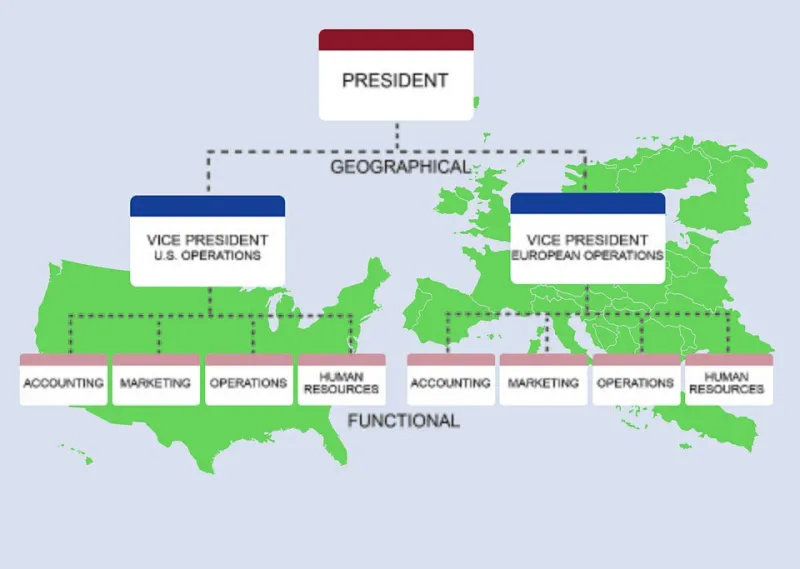
Photo: Designed for Virginia Tech Libraries by Brian Craig http://bcraigdesign.com, CC BY 4.0, via Wikimedia Commons
The Illusion of Progress
There is a particular kind of optimism that takes hold in boardrooms when a major technology investment is approved. Executives envision streamlined workflows, empowered teams, and measurable competitive advantage. The vendor demos are compelling. The implementation roadmap looks airtight. And yet, twelve to eighteen months later, adoption rates are disappointing, ROI projections go unmet, and the organization quietly reverts to its old habits — often while still paying enterprise licensing fees for tools nobody uses.
This pattern is not a technology failure. It is an organizational one.
Across industries — from financial services in New York to logistics firms in the Midwest — companies are discovering a hard truth: purchasing modern infrastructure does not automatically modernize a business. When the underlying organizational chart, team incentive structures, and communication hierarchies remain unchanged, new technology simply inherits the dysfunctions of the old environment. The software becomes a more expensive version of the problem it was meant to solve.
Why Structure Determines Adoption
Organizational design shapes behavior in ways that technology cannot override. Consider a mid-sized US manufacturing company that invested heavily in a cloud-based ERP platform to unify its supply chain operations. The platform was technically sound. The integration was executed on schedule. But the company's procurement team and its logistics division had historically operated as separate cost centers, each with its own leadership, KPIs, and reporting lines. Neither team had any incentive to share data transparently with the other.
The result was predictable: both teams used the new system selectively, entering only the data they were required to enter for compliance purposes while maintaining shadow spreadsheets for the information they actually relied on. Within a year, the ERP had become a compliance tool rather than an operational intelligence platform. The estimated annual value the system was supposed to generate — north of $4 million — remained entirely unrealized.
The technology was never the problem. The org chart was.
The Hidden Cost of Misaligned Incentives
One of the least-examined contributors to failed digital initiatives is the incentive structure surrounding the people who are supposed to adopt the new tools. When employees are evaluated on metrics that have no connection to the behaviors the new technology is designed to encourage, adoption stalls almost immediately.
A regional healthcare network in the Southeast learned this when it rolled out a new patient data platform intended to reduce duplicative testing and improve care coordination across departments. Physicians were still compensated based on volume metrics — the number of procedures and consultations they completed. Spending additional time learning and navigating a new system offered no professional benefit and created real short-term friction. Predictably, usage rates among clinical staff hovered below 30 percent for the first two years of deployment.
No amount of training sessions or vendor-led workshops could compensate for the structural misalignment between what the organization said it valued and what it actually rewarded. The incentive architecture had to change before the technology could deliver its intended value.
Communication Patterns as Infrastructure
Beyond org charts and incentive models, the informal communication patterns within an organization function as a kind of invisible infrastructure. In many legacy enterprises, information flows according to hierarchy rather than function. Senior leaders receive curated summaries. Middle managers act as gatekeepers. Frontline teams operate with limited context about strategic priorities.
When digital transformation tools are layered on top of these communication patterns, they often amplify existing bottlenecks rather than eliminating them. Collaboration platforms deployed into organizations with top-down communication cultures frequently become broadcast channels — leadership pushes announcements downward, and the bidirectional dialogue the platform was designed to enable never materializes.
This is why some of the most digitally mature organizations in the US — companies frequently cited in Gartner and McKinsey research on transformation success — invest as much in communication redesign as they do in software procurement. They treat information flow as a design problem, not an assumption.
A Framework for Structural Readiness
Leaders who want to avoid the modernization paradox need to assess organizational readiness with the same rigor they apply to technical due diligence. The following framework offers a starting point.
Map authority against workflow. Before deploying any new platform, document who currently makes decisions at each stage of the relevant workflow. Identify whether decision-making authority aligns with where the new system places data and accountability. Where there is a mismatch, the org chart — not the software configuration — must be adjusted first.
Audit incentive alignment. Review the performance metrics for every team that will interact with the new system. Ask explicitly: does any existing incentive actively discourage the behaviors this technology is designed to promote? If the answer is yes, address the compensation or evaluation structure before the go-live date.
Redesign communication pathways. Identify the two or three cross-functional handoffs where information loss is most likely to occur under the new system. Design explicit protocols for those handoffs — who communicates what, in which format, on what cadence — and establish those norms before deployment begins.
Appoint cross-functional ownership. Resist the temptation to assign a new platform entirely to the IT department. Effective digital initiatives require a named business owner in each affected function, with the authority and accountability to drive adoption within their domain.
Build a 90-day structural review into every implementation. Three months after go-live, conduct a formal assessment focused not on technical performance but on organizational behavior. Are teams using the system as intended? If not, is the barrier technical or structural? The answer will determine the correct intervention.
The Deeper Lesson for US Business Leaders
The companies that consistently extract value from technology investment are not necessarily the ones with the largest budgets or the most sophisticated platforms. They are the ones that treat organizational design as a prerequisite — not an afterthought — to digital change.
Digital transformation, at its core, is a human endeavor. The code, the cloud infrastructure, and the AI-assisted workflows are enablers. But the people, the structures, and the incentives they operate within are the actual determinants of whether any of it works.
Before your organization approves the next major technology initiative, the most valuable question leadership can ask is not "What platform should we buy?" but rather "Are we organized to use it?"
The answer to that question will do more to determine the outcome than any vendor selection process ever could.