Is Your Digital Transformation Actually Working? The One Number That Tells the Truth

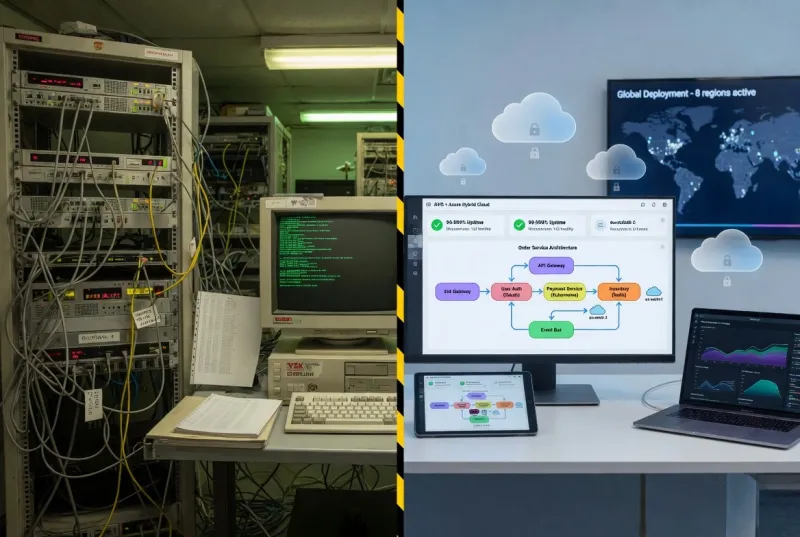
Photo: business team analyzing digital transformation metrics dashboard results, via thumbs.dreamstime.com
Let us begin with an uncomfortable observation: most digital transformation programs are not transforming anything.
They are producing dashboards. They are generating internal communications. They are filling conference rooms with consultants and filling inboxes with progress reports. But the core question — are we competing more effectively than we were eighteen months ago — is one that surprisingly few organizations can answer with confidence.
This is not cynicism. It is a documented pattern. Gartner research consistently finds that a significant share of large-scale digital initiatives fail to meet their stated business objectives. Forrester has noted that many organizations struggle to connect technology investments to revenue or cost outcomes in any measurable way. The language of transformation is everywhere. The evidence of transformation is harder to find.
The Theater Has a Name — and a Price Tag
"Transformation theater" is the term gaining traction among enterprise strategists to describe the phenomenon of digital activity that looks compelling on paper but produces no durable competitive shift. It has recognizable characteristics.
The organization announces a digital transformation initiative with executive sponsorship. A new platform is procured. A Center of Excellence is established. Metrics are created to measure adoption of the new platform rather than outcomes driven by it. Success is declared when the tools are deployed and the training sessions are complete.
Nothing changes in how quickly the company responds to customers. Nothing changes in how efficiently it allocates resources. Nothing changes in its ability to enter new markets or defend existing ones. But the initiative is, by its own internal measures, a success.
For startups and growth-stage companies in the US, this pattern carries an especially steep cost. Unlike large enterprises that can absorb years of misdirected investment, smaller organizations betting on digital capability as a competitive differentiator cannot afford the luxury of theater. Every dollar spent on tools that do not move the needle is a dollar not spent on product development, customer acquisition, or talent.
Why Most Metrics Miss the Point
The measurement problem at the heart of transformation theater is worth examining directly. Organizations typically track what is easy to count: number of processes automated, percentage of employees trained on a new system, volume of data migrated to a cloud environment. These are activity metrics. They measure effort, not impact.
The distinction matters enormously. An organization can automate fifty processes and see no improvement in customer satisfaction, revenue per employee, or speed to market. It can migrate its entire data infrastructure to the cloud and still make decisions just as slowly as it did before. Activity metrics create the appearance of progress while leaving the underlying competitive position unchanged.
What genuine transformation requires is an outcome metric — a number that reflects actual business performance and can be credibly linked to the digital capabilities being developed.
The One Metric That Separates Real Transformation From Theater
If forced to identify a single metric that most reliably separates organizations achieving genuine digital transformation from those engaged in expensive imitation, the answer is customer-facing cycle time — the elapsed time from a customer need or market signal to a delivered response.
This metric encompasses everything that transformation is supposed to improve. It reflects the speed of your data infrastructure. It reflects the efficiency of your internal workflows. It reflects the quality of your cross-functional alignment. It reflects whether your automation investments are actually reducing friction or simply digitizing existing bureaucracy.
Consider two US-based financial services firms that both undertook digital transformation programs over the same three-year period. The first firm deployed a modern CRM, implemented robotic process automation across its back office, and moved its document management to a cloud platform. The second firm did less — but it rebuilt its loan origination workflow end to end, with a specific target of reducing approval time from eleven days to under forty-eight hours.
Three years later, the first firm reported higher employee satisfaction with its tools and a significant reduction in manual data entry. The second firm had captured a measurable share of the small business lending market from competitors, with customer acquisition growing at twice the industry rate. The difference was not the sophistication of the technology. It was the clarity of the outcome being pursued.
Case Studies in Both Directions
The pattern repeats across industries. A regional US grocery chain that spent heavily on in-store digital signage and loyalty app features found, after two years, that its customer retention metrics had not improved. A smaller competitor that focused its technology investment specifically on reducing out-of-stock frequency — using predictive inventory algorithms tied directly to shelf replenishment — saw a measurable improvement in basket size and repeat visit rates within twelve months.
In the enterprise software space, a mid-size SaaS company famously reversed a period of stagnant growth not by implementing more internal tools, but by instrumenting its customer onboarding journey and relentlessly reducing the time from contract signature to first value delivered. That metric — time to first value — became the organizing principle for every subsequent technology decision. It improved by 60 percent over eighteen months. Customer churn dropped. Expansion revenue grew. The transformation was not announced in a press release. It showed up in the financials.
The contrast with transformation theater could not be sharper.
A Diagnostic Test for Your Own Initiative
For leaders who want to evaluate honestly whether their current transformation program is generating real competitive advantage, the following questions serve as a useful diagnostic.
Can you name the specific customer outcome your transformation is designed to improve? Not the process. Not the platform. The customer outcome. If the answer requires more than one sentence, the initiative may lack sufficient clarity.
Does your primary success metric move independently of your tool adoption rate? If the only way your metrics improve is when more employees use the new system, you are measuring adoption, not impact.
Would a competitor who replicated your technology investment automatically replicate your results? If yes, you have implemented a commodity capability, not a competitive advantage. Real transformation produces outcomes that are difficult to copy because they reflect organizational learning, not just software procurement.
Has your customer-facing cycle time improved in the past twelve months? This is the ground truth question. If the answer is no, the transformation work to date has not yet translated into competitive differentiation — regardless of what the internal metrics say.
Reorienting Toward What Actually Matters
The path out of transformation theater does not require abandoning existing investments or starting over. It requires reorienting measurement around business outcomes rather than technology activity.
For growth-stage companies, this means selecting one customer-facing metric — time to delivery, response time, onboarding speed, error rate — and making it the explicit north star for every digital initiative. For larger enterprises, it means creating accountability structures that connect IT investment decisions to measurable shifts in that metric.
The tools available to US businesses today — cloud infrastructure, machine learning, automation platforms, real-time analytics — are genuinely powerful. The organizations extracting competitive advantage from them are not necessarily the ones with the most sophisticated implementations. They are the ones that were most rigorous about defining what success looks like before the implementation began.
Transformation is not a program. It is not a platform. It is a sustained, measurable improvement in your organization's ability to create value for customers faster than your competitors can. Everything else is theater.